Face-Lift
As people age, the effects of gravity, exposure to the sun and the
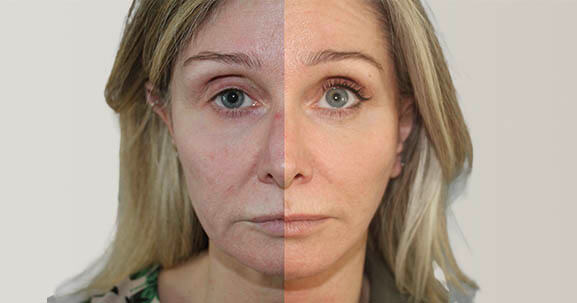
stresses of daily life begin to take their toll on the face. Deep creases form between the nose and mouth; the jawline grows slack and jowly; folds, loose skin and fat deposits appear around the neck.
A
face-lift is a surgical procedure performed to improve the most visible
signs of the ageing process, by eliminating excess fat, tightening the
muscles beneath the skin of the face and neck, and remove any sagging
skin. Many times this procedure is performed in conjunction with eyelid, forehead or other surgery.
A well-performed face lift should revitalise the face without
distorting or changing ones facial features. A facelift can make you look younger and fresher, and it may enhance your self-confidence in the process. However it can't, and shouldn't, give you a totally different look, nor
can it restore the health and vitality of your youth. Before you decide
to have surgery, think carefully about your expectations and discuss
them at your consultation.
The Face Lift FAQs
The
best candidate for a facelift is a man or woman whose face and neck
have begun to sag, but whose skin still has some elasticity. There is no need to wait until hanging folds or almost irreversible changes have taken place.
While the facelift procedure is probably the most sought after within
the over 40's group, increasingly these are being carried out on
younger patients. In fact these days, many patients prefer
earlier corrections to maintain youthful appearances, and therefore
avoid living through a period of looking "old and tired". Although
the occasional film star may undergo a celebrated facelift, the vast
majority of patients are those normal people who take pride in their
appearance and feel younger than they look.
A facelift has always been regarded as a major surgical procedure, but in reality need hold no fears. It is important to remember however that surgery cannot erase permanent
creases, particularly around the lips and mouth, and that it does not
stop the ageing process. A facelift just "sets the clock back"; it does not stop it running.
At the time of consultation Mr. Karidis will ask you about your
general medical history, specifically pertaining to any medical
conditions that could cause problems during or after surgery, such as uncontrolled high blood pressure, blood clotting problems, or a tendency to form excessive scars.
Slight differences in facial symmetry are normal and will be pointed
out as many times these are unnoticed by the patient. It
will also be explained that certain areas of the face cannot be helped
by surgery, such as the lines around the mouth, frown, and crow feet
region. The newer skin resurfacing lasers, fillers and peels covered under separate notes best deals with these areas.
If
you are a smoker you will be asked to stop smoking well in advance of
surgery as well as for a period after the operation(generally 4 weeks
before and 4 weeks after) . Smoking seriously constricts
blood vessels and therefore decreases blood flow to a given area
resulting in poor healing. Aspirin and certain anti-inflammatory drugs and other medications (discussed in DO'& DON'TS section) can cause increased bleeding, so you should avoid these.
If you're contemplating facelift surgery, this information will give
you a basic understanding of the procedure. It can't answer all your
questions since a lot depends on the individual patient. However, any
specific questions should always be addressed at the consultation.
Over the years the classical (skin only) operation has undergone a number of modifications to improve the overall results. These modifications were aimed at lifting not only the skin but also
the underlying structures (i.e. muscles or SMAS), which were equally
subjected to the effects of the ageing process. By addressing these structures, the face could be lifted to enjoy a longer lasting effect.
The SMAS type of lift is that favoured by many competent surgeons although there are now many
variations such as the, extended SMAS lift, Composite Lift and
Sub-periosteal Lift. Each of the above modifications can be tailor made
to suit individual needs. It is equally important to remember that
different methods do not indicate a departure from any formally
established standard, as there is no- one standard. Many times liposuction is carried out during a face-lift so as to ensure that the neck and jawline is clearly defined.
More recently there have been newer 'mini' techniques that have been
popularised such as the MACS lift, S-lift and thread lifts. These have
been devised with the aim of minimising scars, extent of surgery and to
generally shorten recovery times. While these techniques may have some
place in patients with very early ageing signs, most have limited
spectrum of facial improvement and probably don't last as long. Of
course, it's a great deal for the surgeon - lots of repeat business -
but not such a great deal for the patient. Because if you keep pulling
on the skin, before long your face looks over stretched, giving you
that "facelift look."
Generally
speaking Mr. Karidis feels that 'less' will always be 'less', and
that the effectiveness, and longevity is always compromised with these
more minimal techniques. 'Mini' techniques or surgery generally gives
you 'mini' results. Our practice viewpoint is that if you
have decided to subject yourself to surgery to address any ageing
aspects of your face, then you should not really look at the immediate
short term, i.e. very quick recovery and minimal swelling, because 3 or
6 months later, you will more than likely be disappointed with your
decision to 'cut corners'. Unfortunately, a facelift is like everything
else in life. If you want more out of it, you have to put more into it
- meaning, you have to be patient with the recovery period. But our
advice for looking your best over the long haul is to do a facelift LESS OFTEN and MORE THOROUGHLY.
It
is impossible to answer this or generalise, as each individual has
different skin quality and texture. A surgeon relies on the quality of
your tissues afterwards to help maintain the results of your facelift.
If a patients skin has lost a lot of the elasticity within the skin
then the facelift will not last as long as someone with better
elasticity. Think of it in terms of a rubber band. If a rubber band has
been left in the sun, it dries out and becomes more brittle and less
elastic. Pulling on this excessively, will result in the band snapping.
Obviously a fresher rubber band has the ability to stretch and hold
much better than one weathered over time.
Another way to look at
the lasting effects of a facelift is to imagine you have an identical
twin. Say you have a facelift and your twin sister or brother does not. In ten years from the surgery, although you both will have aged, you will still look better than your unoperated twin will! So in that sense, the effects from the benefits of the surgery will be permanent.
Occasionally some patients start to panic 4-5 months after surgery
because they notice some degree of laxity or loosening appearing in
their face and neck, and feel that their face is starting to drop all
over again and will become like before. This loosening is normal in the
first few months after the initial surgery. This is just the natural
settling process that occurs and contrasts with the initial tightening
and swelling from the first few days after surgery. However don't
panic. This process does mean that your face will completely drop
again. It is just your facial muscles and skin adjusting to the new
contours of the facelift.
Of course one must remember that we cannot stop the clock altogether
and therefore your face will continue to age with time. Many patients
never have a second lift, while others may desire further surgery seven
to 15 years later.
In
broad terms the incision used for both men and women is the same,
although there is a slight difference, as result of the hair bearing
nature of the male facial skin. Generally speaking the incision starts
high in the temple area (hidden within the hair at this point) then
courses down in front of the ear, round the earlobe and up behind the
ear before curving gently back into the hairline of the neck. It may on
occasion, be necessary to add an incision in under the chin. Mr.
Karidis has modified his facelift technique over the years to both
minimise the extent of the scarring, but at the same time not
compromise the anti ageing effects and longevity of the surgery. He
has developed and adopted only those techniques which deliver a highly
predictable, and, above all else: natural result.
Using the above incisions the skin is lifted forwards onto the cheeks and down as far as the jawline and into the neck. Importantly, the underlying muscles are then lifted accordingly so as to ensure a longer lasting effect. Having repositioned the deep tissues, leaking blood vessels are then
sealed with the use of a cautery. Following this, the loose expanded
skin is elevated upwards and any overlapping or excess skin is trimmed. The wound is then closed entirely with dissolving sutures. Having
modified his technique over the last 10 years Mr. Karidis has also
dispensed with the use of drains, which he believes do not contribute
in any positive way to the surgery and on the contrary make it more
painful for the patient afterwards. A bandage dressing is then gently applied around your face in order to apply light pressure over the wound area.
Watch the procedure in Virtual 3d
Mr. Karidis's prefer to perform facelifts with a full general anaesthetic although technically it can be performed with a local anaesthetic. This may also depend on whether you will be having extra work done to the eyes or brow area. In general terms, the longer the surgery the better it is for the patient to have a general anaesthetic, so as to avoid feeling any duress or discomfort from lying still for a long period of time under local anaesthetic. Surgery for a facelift can take between 2-3 hours, although this takes longer when combined with additional surgery i.e. eyelid surgery. It can therefore be quite daunting and awkward to lie still all this time under only a local anaesthetic!
Patients need to understand that the post operative period following a facelift can be quite a daunting one.
It is not so much a question of pain although the bandages can make it
feel quite tight. This is partly due to the bandages and partly due to
the muscle tightening that is performed at the time of the surgery. As
such even after the bandages are removed your face will still feel
tight and will continue to feel so in the first few days, particularly
as the swelling starts to set in. As a result of this tightening, you
will also feel that you cannot open or close your mouth properly(even
though you actually can!) You will initially look in the
mirror and probably be shocked that you do not look anything like the
fresher better face you were hoping to achieve with the facelift! In
fact you will probably feel you look hideous, swollen, distorted and
uneven. During this time, many patients actually hate both themselves
and their surgeon for having done this. This is NORMAL! It will however settle in the next 2-3 weeks and you will once again start to like your surgeon and be pleased with yourself for doing it!
After the bandages are removed, your hair will be carefully washed and you may then return home.
Over the next few days your hair should be washed daily with a gentle
shampoo, obviously exercising care in the suture area. As
mentioned above all the stitches are dissolving and will not need to be
removed. We normally see patients at about 6-7 days afterwards to
assess your progress. You will be provided with full postoperative care
instructions, which you are kindly asked to follow.
Post Operative Instructions
As
mentioned above, following surgery you will experience obvious
swelling, lumpiness and bruising of the face to varying degrees, which
will last up to 3 weeks. After this initial traumatic phase, you
will continue to have some degree(although much less than before) of
lumpiness and swelling in your cheeks and neck area for a somewhat
longer period. Occasionally, isolated bruised and hardened
areas can take up to four months to resolve. The appearance of
tiny thread veins on the cheeks can rarely occur. Swelling may
produce some temporary lag in the normal motion of the facial muscles
but this should gradually subside without permanent change.
You will also experience a feeling of numbness and tension in the neck and cheek areas as well as around the ear. This is a result of the small sensory nerve fibres in the skin being
separated during the operation. Sensation usually returns to normal but
may take anytime up to 9-12 months.
Mr. Karidis has modified his technique so that no hair elevation occurs with his facelifts. In men however the beard may be repositioned
underneath and behind the ear, as a result of the skin being lifted,
necessitating some adjustment of shaving in these areas.
A scar will obviously form at the incision sites.
This is always red and slightly lumpy in the first few months following
surgery. Of course light makeup applied over the scars in the early
phase will help hide them. One must remember of course, it is always
impossible to ultimately predict how any individual's scar will appear. However sometimes behind the ears, and rarely in front of them, scars of certain skin types can stretch.
These skin types cannot be identified prior to surgery. Often, these
can easily be hidden by longer hairstyles but may become visible if the
hair is cut short or lifted. Very occasionally a small bald strip can
develop adjacent to the scar that is situated above the ear in the
temple area.
Although as mentioned
scars are unpredictable, the vast majority of patients operated by Mr.
Karidis do not experience problems with their scars. As
a result of careful planning and meticulous technique, Mr. Karidis aim
is to preserve your ability and right to be able to put your hair up
comfortably without worrying about your scars in front or behind your
ears being visible.
You will experience a tight feeling around your face following surgery as a result of the bandages used. This will be present more so in the first 10 days as a result of the initial swelling which makes the face feel tighter. However it is safe to say that the majority of patients experience a suprisingly small amount of actual pain following a facelift. In fact most patients experience a numb sensation once the bandages are removed. This of course improves with time.
All surgery carries some uncertainty and risk. When a Facelift is performed by a qualified Plastic Surgeon, complications are infrequent and usually minor. Still,
individuals vary greatly in their anatomy, their physical reactions,
and their healing abilities, and the outcome is never completely
predictable. Conditions such as high blood pressure, bleeding disorders and smoking increase the chances of complications and therefore will be discussed in greater detail at the consultation.
Complications that can occur with a facelift include a haematoma (a collection of blood under the skin that must be drained by the surgeon), injury to the nerves that control facial muscles (usually temporary and less than 1% chance), infection(less than 1%), delayed wound healing, skin lumpiness, necrosis(skin loss), occasional hair loss in the temple region along the scar or distortion (usually temporary).
Risks such as leg and lung blood clots are rare. Early
mobilisation by moving around as soon after the surgery as possible
reduces this considerably. Mr. Karidis regularly deploys anti-clotting
measures such as special stockings (TEDS) and compression devices
(Flowtron) during surgery to minimise this.
You can reduce your risks by closely following Mr. Karidis's advice both before and after surgery.
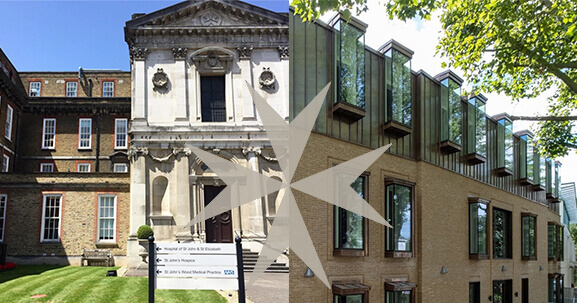
In accordance with the National Healthcare commission guidelines, according to the last five years of annual audit figures submitted to the Hospital of St. John and St. Elizabeth in London, Mr. Karidis performed on average 120 facelift procedures per year. In the last 10 years he has performed over 900 facelift procedures.
You
should be up and about in a day or two, but plan on taking it easy for
the first week after surgery. Be especially gentle with your face and
hair, since your skin
may be both tender and numb, and may not
respond normally at first. Avoid strenuous activity, including sex, and
heavy housework, for at least two weeks. Mild stretching and walking
are fine. Above all, get plenty of rest and allow your body to spend its energy on healing.
Remember, at the beginning your face will look and feel rather strange.
Your features will be distorted from the swelling, and your facial
movements may be slightly stiff and you'll probably be self-conscious
about your scars and bruising. It's not surprising therefore
that most patients are disappointed and depressed in the first couple
of weeks. However you must try to stay positive and understand that
things WILL get better! The operation will be worth it!!
From about two weeks after the surgery you can probably get out and about without scaring
anybody, however you won't fool anyone either about what you have had
done. From the third and fourth week things get
decidedly better, with most of the signs of surgery, i.e. bruising and
swelling mostly gone. You can therefore start to get around without
most people knowing that you've had some surgery. From this point
onwards, you'll look and feel much better. You must
remember however that for all the swelling to entirely disappear and
for you to look entirely 100% normal will take up to six or even nine
months. For all intents and purposes however most patients are back to work from about the third week after surgery. Every week that goes by will be slightly better.
If you need it, camouflage makeup can mask any residual bruising
that remains. However depending on everyones individual sensitivities
some people might feel more comfortable about returning to work after 4
or even five weeks. Remember we are all different and heal differently.
Have some flexibility within your anticipated return to work schedule.
The chances are excellent that you'll be happy with your facelift, especially if you realise that the results will not be immediately apparent. In the properly selected individual it is very likely to boost ones self-confidence and self-image.
The results of any properly carried out facelift should be lasting but remember the procedure cannot halt the ageing process. The clock can be turned back but you cannot stop it ticking. However, it is reasonable to say that the reversal in ageing made available to the average facelift patient is undoubtedly successful enough to be recommended as a solution to many of the ageing signs that some individuals find objectionable.
Liz Jones' Diary of a Facelift
a Facelift click here
Samples of Alex Karidis Work
Alex Karidis' work click here